

The Rebar Mechanical Coupler That Eliminates the Pour Strip
What a mechanical rebar splice does, the ACI 318 Type 1 vs Type 2 distinction, how it beats a lap splice, and why the right coupler takes the leave-out off the critical path on reinforced and post-tensioned slabs.
A rebar mechanical coupler built to do one job: take the pour strip off the drawings.
A rebar mechanical coupler joins two reinforcing bars end to end so the steel is continuous across a joint, instead of relying on a lap that sits exposed in an open gap for weeks. Most coupler explainers stop at that definition. This one is written by the engineers whose entire product is a mechanical rebar splice named after eliminating the pour strip, so it carries a point of view a neutral glossary does not: PS=Ø is a coupler engineered so the leave-out at a construction joint never has to sit open. The couplers and closure strip go in where the pour stop would sit, the slab still shortens and cures on its own timeline, then the couplers are grouted to restore a continuous connection. It is an ICC Approved, ACI 318 Type 1 and Type 2 compliant mechanical rebar splice documented under ICC-ES Evaluation Report ESR-4213 and backed by over 45 years of engineering expertise.
What is a rebar mechanical coupler?
A rebar mechanical coupler is a connector that joins two reinforcing bars end to end so load transfers directly from one bar into the next. The bar on one side threads into the coupler on the other, so steel is joined steel to steel rather than relying on an overlap transferring force through the surrounding concrete. The result is a connection that develops the bar the way a continuous run of reinforcement does, which is exactly what an engineer needs where reinforcement has to cross a construction joint without a break.
That is the whole reason PS=Ø exists as a coupler rather than a better way to form a strip. You can see the full assembly, the couplers, grout tubes, closure strip, bond breaker, and grout, on our system page, which walks through how the PS=Ø mechanical rebar splice works. Not sure how it would detail into your set? Call (800) 355-8414 and our engineers will read the sheet with you.
ACI 318 Type 1 vs Type 2 splice
ACI 318 sorts mechanical splices into two classes by how much strength the connection has to develop. A Type 1 splice must develop at least 125 percent of the specified yield strength of the bar. A Type 2 splice must do everything a Type 1 does and also develop the specified tensile strength of the bar, which is why Type 2 is required in regions expected to yield, including seismic force-resisting systems. The distinction decides whether a coupler is allowed where the structure is designed to strain past yield.
| Attribute | ACI 318 Type 1 | ACI 318 Type 2 |
|---|---|---|
| What it develops | A splice strength of at least 125% of the specified yield strength (fy) of the bar | Everything a Type 1 splice does, plus the specified tensile strength of the bar |
| Where it is used | General reinforcement where full ductility of the bar is not demanded at the splice | Regions expected to yield, including seismic systems where the bar must reach its tensile capacity |
| The design intent | Join bar end to end so the connection carries load like a continuous run of steel | Guarantee the splice is never the weak link, even when the bar is strained past yield |
| PS=Ø status | Compliant | Compliant, so the engineer of record can treat the joint as continuous steel |
PS=Ø couplers are compliant with both classes. They are ACI 318 Type 1 and Type 2 compliant and ICC Approved under ICC-ES Evaluation Report ESR-4213, so the engineer of record can treat the seam as continuous steel rather than a detail to design around. That matters because the coupler is only useful if the code accepts it where the reinforcement actually has to perform.
The PS=Ø mechanical rebar splice system
A coupler on its own joins two bars. A mechanical rebar splice system does that and manages the movement the joint was there to allow, which is what lets it replace a pour strip rather than just reinforce one. PS=Ø ships as an engineered assembly, not a loose part, so the whole detail is designed and documented up front.
Couplers and shop drawings
The bar on one side threads into the coupler on the other, joined end to end across the seam. Our engineers detail the splice into your structural design so it carries the reinforcement where a pour strip would otherwise interrupt it.
Bond breaker and closure strip
These let the concrete shorten and move the way a pour strip is meant to allow, so the slab gets its natural volume change early instead of carrying an open leave-out through the build.
Grout tubes, grout, and install kit
Once shrinkage is complete, the couplers are grouted to finish a continuous connection. The system includes the install kit and grout kit, so the crew closes the seam with grout instead of a return pour.
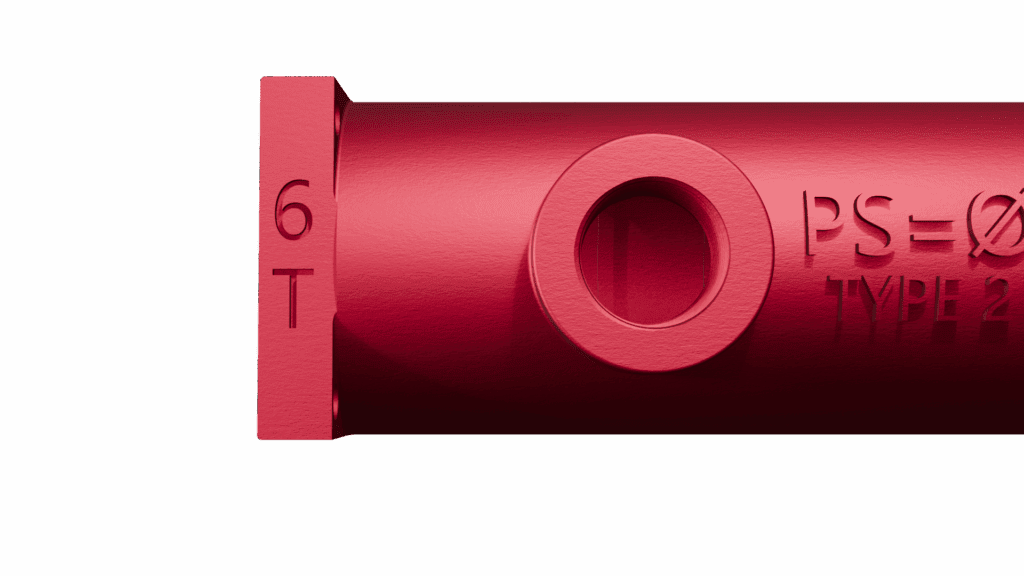
The system supports rebar sizes 6, 8, 9, and 11 in both Grade 60 and Grade 80, and it can be integrated with any rebar size. The typical lead time is 8 weeks, and every assembly is Made in the USA. Ready to detail it into a slab? Call (800) 355-8414 and we will size it with you.
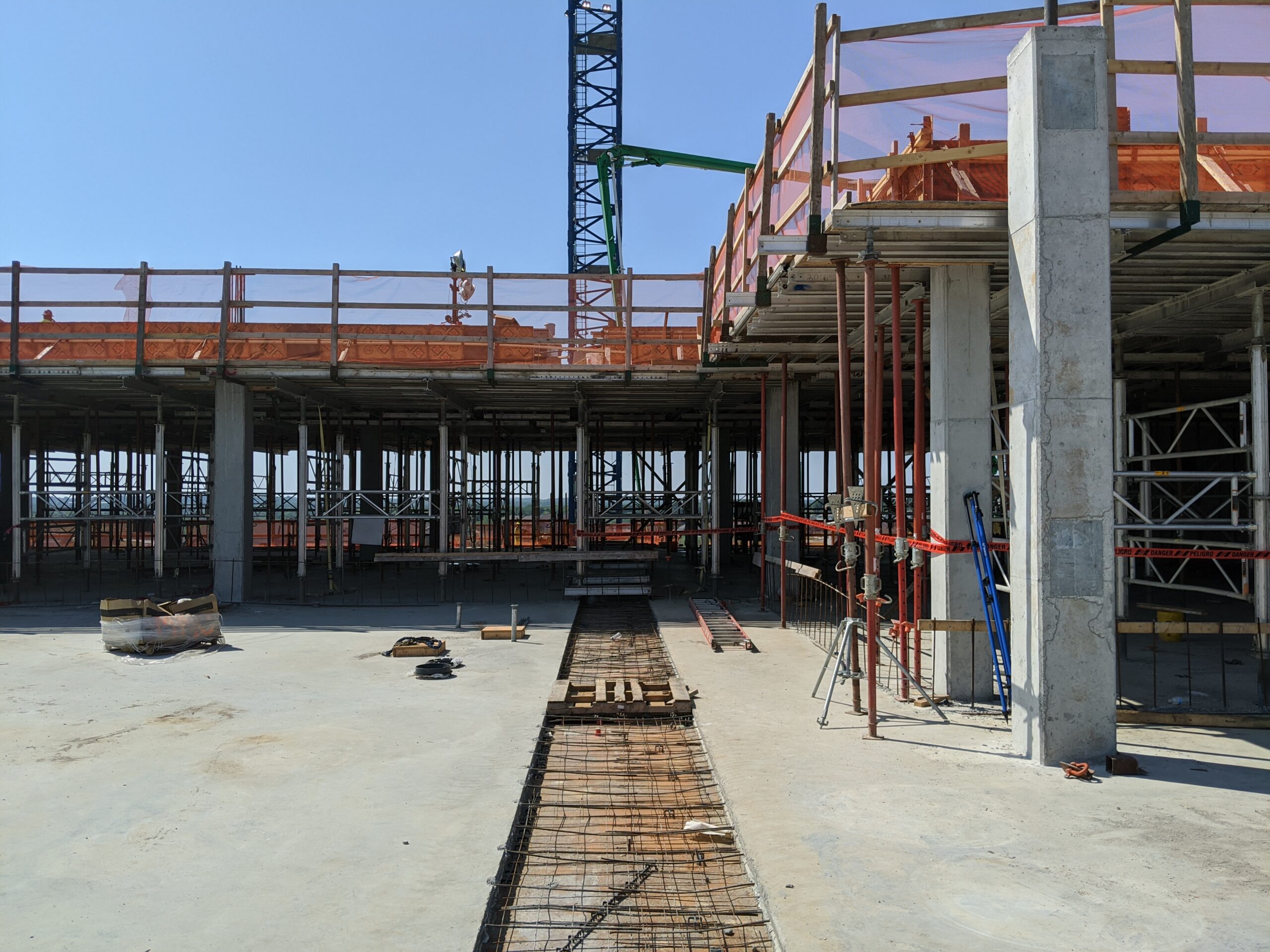
Mechanical splice vs lap splice at the joint
A lap splice overlaps two bars and transfers force through the surrounding concrete. A mechanical splice joins them end to end through a coupler. Both develop the bar, but at a construction joint they behave very differently, because a lap has to sit exposed in the gap until the concrete is cast and cured. Here is the comparison that decides which one keeps the schedule moving.
| At the construction joint | Lap splice | Mechanical splice (PS=Ø) |
|---|---|---|
| How bars connect | Two bars overlap and transfer force through the surrounding concrete | One bar threads directly into a coupler on the other bar, steel to steel |
| At a pour strip | Lapped bars sit exposed in an open gap until the strip is cast and cured weeks later | Couplers close the leave-out up front, so steel is joined before the slab waits to shorten |
| Length it adds | Needs a development length of overlap, which congests the bar layout | Joins end to end, no lap length and no bar congestion at the seam |
| When continuity is restored | Only after the closure pour cures, often 30 to 60 days out | The moment the couplers are grouted, no return pour on the critical path |
That last row is the one that moves the calendar. With a lap at a pour strip, continuity waits on the closure pour to cure, often 30 to 60 days out. With a mechanical coupler, the seam is continuous the moment it is grouted. See why that removes the closure or delay strip entirely on our closure pour page, which explains why the splice removes the delay strip.
How the coupler eliminates the pour strip
The pour strip exists to let the slab shorten, not to interrupt the reinforcement, so the movement can be kept while the open leave-out is removed. A mechanical coupler carries the steel across the seam so the strip never has to sit open. Here is the sequence at a high level.
- 1
Engineered shop drawings
Our engineers detail the splice into your structural design so the couplers carry the reinforcement across the seam where a pour strip or delay strip would otherwise interrupt it.
- 2
Couplers set where the pour stop would sit
The couplers and closure strip go in exactly where the leave-out would sit, so crews are not leaving an open gap and exposed rebar across the deck for the trades to work around.
- 3
The slab shortens and cures naturally
The concrete goes through its natural volume change off the critical path. No 30 to 60 day open strip, no waiting on a pour strip to keep the schedule moving.
- 4
Grout the couplers to close the seam
Once shrinkage is complete, the couplers are grouted to finish a continuous, ICC Approved, ACI 318 Type 1 and Type 2 compliant connection. The pour strip is gone.
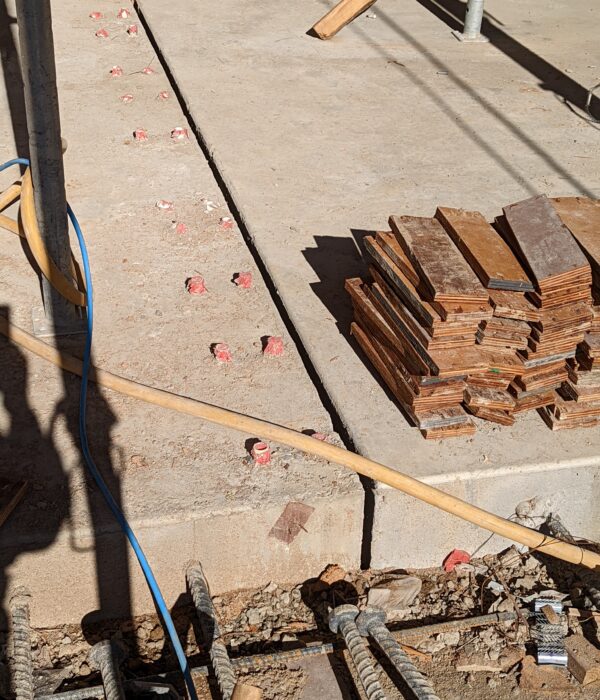
This works on both conventionally reinforced and post-tensioned slabs. A PT slab moves more, because it shortens elastically at stressing and keeps shortening through creep and drying shrinkage, so it leans even harder on the pour strip. PS=Ø splices the mild reinforcement that has to be carried continuous across the seam without touching the tendon layout or stressing sequence. See how PT continuity is maintained across the joint on our post-tensioned concrete slab page, then call (800) 355-8414 to talk through your structure.
Where the coupler fits on your next slab
A rebar mechanical coupler is only as good as the detail it lives in. The engineered shop drawings are what turn a coupler into a splice that replaces the leave-out, and that is the part our team owns end to end.
Want the full mechanics of the seam, the couplers, the closure strip, and the grouting? Our system page walks through the mechanical rebar splice that replaces the pour strip, and our closure pour page explains why the splice removes the delay strip.