
What Is a Pour Strip in Concrete?
What a pour strip is, how it differs from a pour stop, delay strip, and closure pour, why the leave-out sits open for weeks, and the mechanical rebar splice that removes it on reinforced and post-tensioned structures.
A pour strip is one leave-out with five names, and a company built on removing it.
A pour strip is a strip of slab left out on purpose at a construction joint and cast later, so the concrete on either side can shrink before the connection is made. Most glossaries define the term and stop there. This one is written by the engineers whose entire product is named after taking that detail off the drawings, so the definition carries a point of view a neutral glossary does not: the pour strip, pour stop, delay strip, closure pour, and shrinkage strip are five names for one detail, and every one of them leaves reinforcement exposed in an open gap for weeks on the critical path. That open leave-out is exactly what PS=Ø was built to remove. The couplers and closure strip go in where the pour stop would sit, so the slab still shortens naturally but the crew is never leaving an open joint. PS=Ø is an ICC Approved, ACI 318 Type 1 and Type 2 compliant mechanical rebar splice engineered over 45 years to keep the reinforcement continuous across that seam.
What is a pour strip?
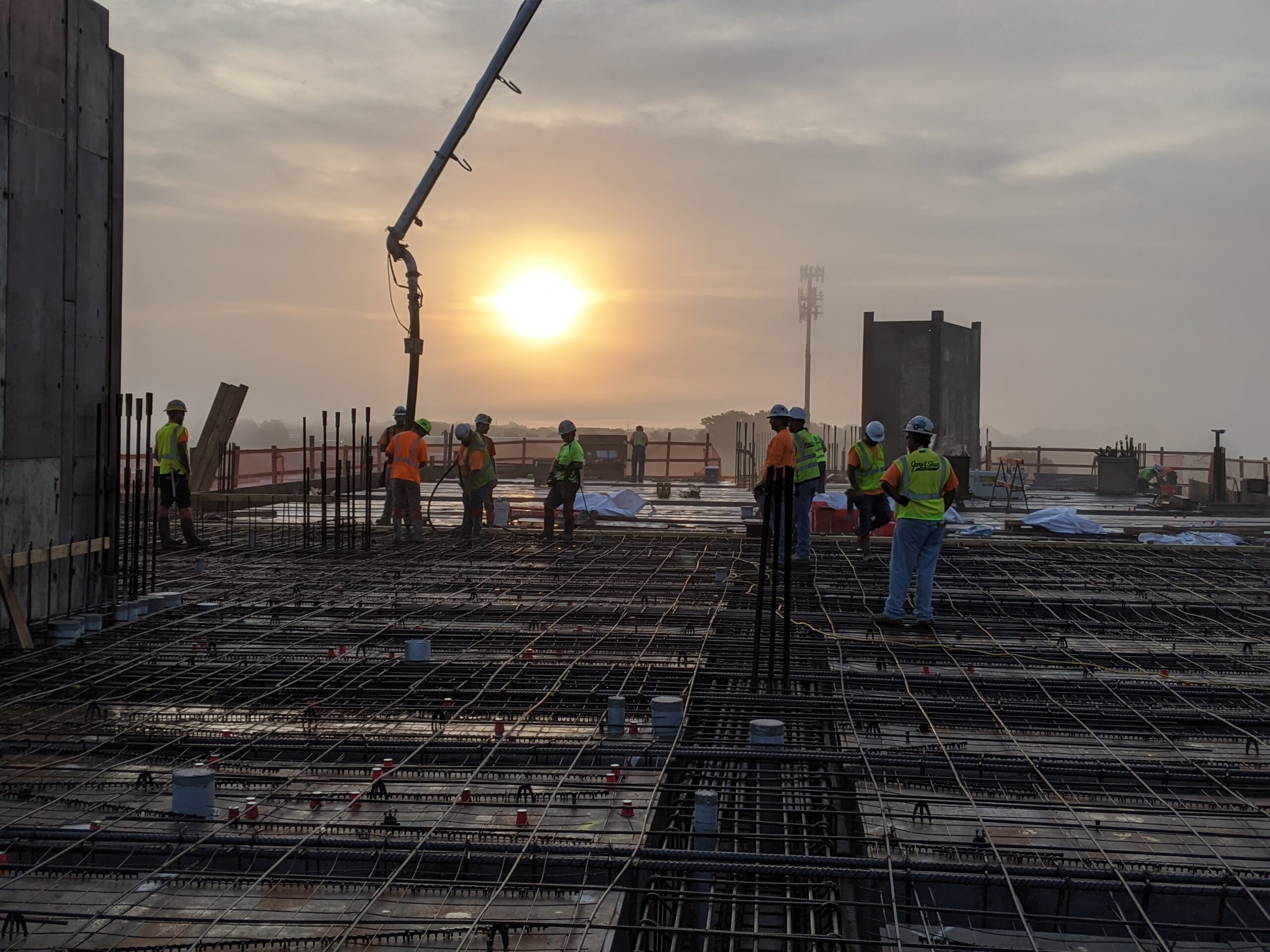
A pour strip is a strip of slab left out at a construction joint, then cast later once the adjacent concrete has done most of its drying shrinkage. Leaving the gap open lets the two sides shorten independently, so restraint-to-shortening does not build up and crack the finished slab. The reinforcement is left exposed across that open strip until it is poured. It is one member of the family of concrete movement joints, and the one tied specifically to sequencing placements rather than to sawn or formed lines in a finished slab.
That return trip is the part a definition usually leaves out, and it is where PS=Ø changes the sequence. Instead of leaving the strip open and coming back to fill it, the reinforcement is spliced mechanically across the seam. The slabs still shorten and cure naturally, then the couplers are grouted to complete a continuous connection. You can see the full assembly on our system page, where a mechanical rebar splice eliminates the pour strip that a traditional detail would leave open.
Pour strip vs pour stop vs delay strip vs closure pour
These terms get used interchangeably on jobsites, and for good reason: structurally, they are the same detail. What changes is who is saying it and which part of the process they are naming. If you want to see exactly where a pour stop lands relative to the strip itself, that distinction is worth pinning down first. Here is how the pour strip vocabulary breaks down, and why it all points at one leave-out PS=Ø removes.
Pour strip
Also called: delay strip, delayed pour strip
A strip of slab intentionally left out and cast later so the concrete on either side can shrink first. This is the most common name for the detail on cast-in-place structures, and the one this company named itself after eliminating.
Pour stop
Also called: pour break, day joint
Where the day's placement stops. On the field that stop line becomes the leave-out the crew comes back to fill once the adjacent concrete has done most of its shrinking. Same detail, named for the pour rather than the wait.
Closure pour
Also called: closure strip, closure joint
The concrete placed later to close the gap that was left open on purpose. Both the open leave-out and the pour that fills it get called the closure pour.
Shrinkage strip
Also called: restraint-to-shortening strip
The same leave-out named for its structural job: relieving restraint-to-shortening by letting the slabs on either side shorten before the strip is cast to lock them together.
The takeaway for a detailer: it does not matter which of these words is on your drawings. If the design carries a leave-out at a construction joint to relieve restraint-to-shortening, that is the detail PS=Ø is engineered to replace. For the full sequence on live decks, our page on the pour strip, delay strip, and closure pour explained walks through the same cluster of terms from the closure side. Not sure what your set calls it? Call (800) 355-8414 and our engineers will read the sheet with you.
Why concrete needs a pour strip, and why it sits open for weeks
Concrete shrinks as it cures, and a large slab tied together rigidly cannot shrink without cracking. The pour strip relieves that restraint by leaving a gap open so each side can shorten first. The whole point is to wait: the strip stays open, commonly 30 to 60 days, before the two sides are tied together. That wait is baked into the schedule, and the open gap affects every trade that has to cross it. Here is the traditional sequence against the PS=Ø sequence.
| Stage | Traditional pour strip / delay strip | PS=Ø splice |
|---|---|---|
| At the joint | Strip left out, reinforcement exposed in an open gap | Couplers and closure strip set where the leave-out would sit |
| While the slab shrinks | Weeks of waiting, gap open on the critical path | Slab shortens naturally, off the critical path |
| Other trades | Work around an open gap collecting debris | Cross a self-supporting seam, no leave-out |
| Closing it | Return trip to form and pour the strip | Grout the couplers, seam is continuous |
Every pour strip is a place the reinforcement is interrupted, water can enter, and a return crew has to be scheduled. That is the trade the industry has accepted for decades. The alternative is not to detail the strip more carefully, but to keep the reinforcement continuous so the leave-out never has to sit open. For the expansion-joint side of the same argument, see our page on expansion joints at a construction joint and how they are eliminated.
How PS=Ø eliminates the pour strip
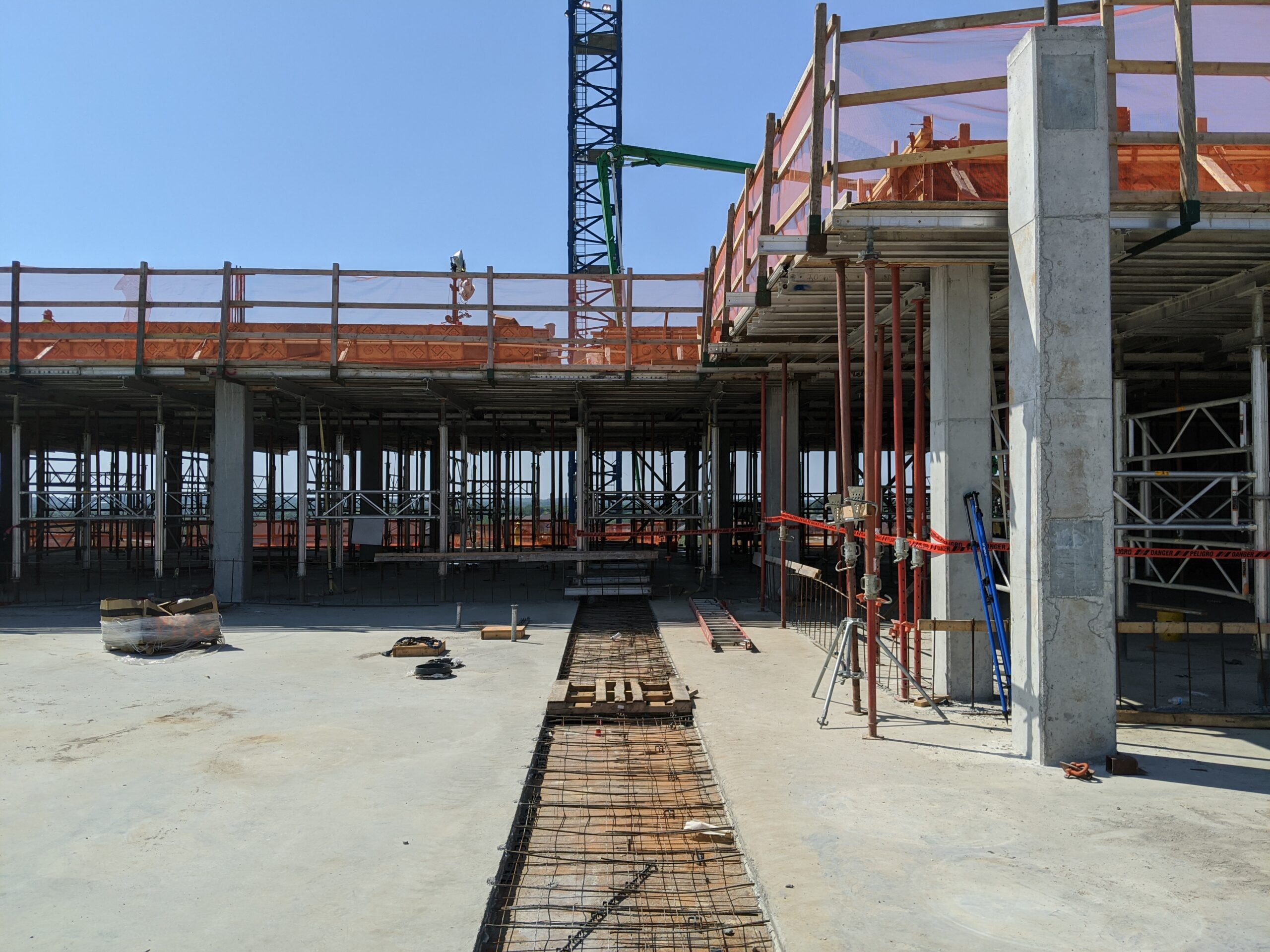
PS=Ø replaces the open pour strip with a self-supporting mechanical splice. The slab still shortens and cures on its own timeline, so you keep the movement the delay strip was there to provide, but the reinforcement stays continuous and the joint closes with a grout, not a return pour. Here is the sequence at a high level.
- 1
Engineered shop drawings
Our engineers detail the splice into your structural design so it carries the reinforcement across the seam where a pour strip or delay strip would otherwise interrupt it.
- 2
Couplers set where the pour stop would sit
The couplers and closure strip go in exactly where the leave-out would sit, so crews are not leaving an open gap and exposed rebar across the deck for the trades to work around.
- 3
The slab shortens and cures naturally
The concrete goes through its natural volume change off the critical path. No 30 to 60 day open strip, no waiting on a pour strip to keep the schedule moving.
- 4
Grout the couplers to close the seam
Once shrinkage is complete, the couplers are grouted to finish a continuous, ICC Approved, ACI 318 Type 1 and Type 2 compliant connection. The pour strip is gone.
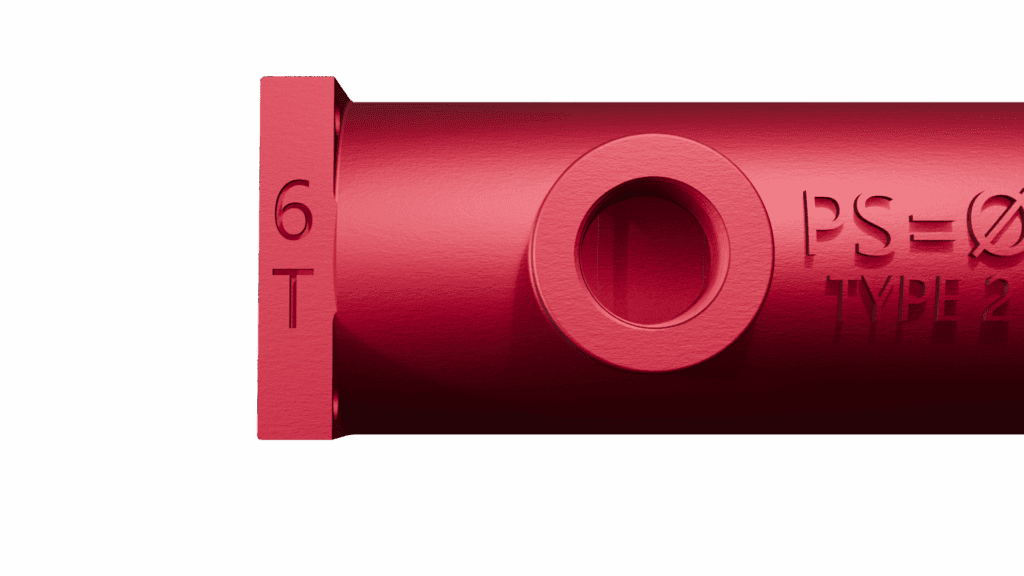
The method has been used to eliminate pour strips and delay strips on live commercial jobsites including Gaylord Pacific, The Ottawa Hospital, and IU Health Downtown. See more on the case studies page, then call (800) 355-8414 to talk through your structure.
What removing the pour strip changes on the jobsite
Taking the pour strip out of the sequence changes the day for everyone who touches the slab. Engineers hold structural intent without detailing an extra leave-out. Placement and finishing crews pour continuously and skip the return trip to close the delay strip. For a crew-level view of how that plays out, read what eliminating the leave-out means for placement and finishing crews.
Want the full mechanics of the seam, the couplers, the closure strip, and the grouting that replace the leave-out? Our system page walks through the mechanical rebar splice that replaces the pour strip and how the whole assembly installs.