
Post-Tensioned vs Reinforced Concrete: How the Pour Strip Differs
When each slab type is used, why a post-tensioned slab shortens through elastic shortening and creep while a reinforced slab shortens from drying shrinkage, and how one mechanical rebar splice removes the pour strip in both cases.
Post-tensioned vs reinforced concrete is usually a load question. For the pour strip, it is a movement question.
Deciding between post-tensioned and reinforced concrete comes down to span, thickness, and how the slab carries load, and most comparisons stop there. This one is written by the engineers whose entire product removes the detail both slab types force you to leave open, so it starts where the load comparison ends: both a PT slab and a reinforced slab rely on a leave-out, a pour strip or closure strip, but for different physical reasons. A reinforced slab leaves it open to release drying shrinkage. A post-tensioned slab leaves it open to release elastic shortening at stressing and creep on top of that shrinkage, so it moves more and leans on the strip harder. Knowing which mechanism you are dealing with is what tells you how much shortening the detail has to relieve, and PS=Ø is the ICC Approved, ACI 318 Type 1 and Type 2 compliant mechanical rebar splice, engineered over 45 years, that keeps the movement while removing the open gap on either slab type.
Post-tensioned vs reinforced concrete
Both are reinforced concrete, but they resist load and move differently, and the movement difference is what drives the pour-strip decision. A reinforced slab uses passive rebar that only works once the concrete cracks in tension. A post-tensioned slab uses tendons stressed after curing to hold the concrete in compression, so it resists cracking before any load arrives and can span farther and run thinner. Here is how the two compare on the points a detailer weighs.
| Point | Reinforced concrete | Post-tensioned concrete |
|---|---|---|
| How it carries load | Passive rebar that only resists tension once the concrete has cracked | High-strength tendons stressed after curing to actively compress the concrete before load arrives |
| Span and thickness | Thicker sections and tighter column spacing for the same capacity | Spans farther and runs thinner, so it dominates podium decks, long-span floors, and parking structures |
| What makes the slab shorten | Drying shrinkage only | Elastic shortening at stressing, plus creep and drying shrinkage, so the slab moves more |
| Why the leave-out exists | Relieve restraint-to-shortening from drying shrinkage before tying the slabs together | Release elastic shortening and creep at stressing before the reinforcement is made continuous |
| How much it leans on a pour strip | Needs shortening relief, but less total movement to release | Leans harder because it moves more, and does most of that movement in the first weeks after stressing |
Read the last two rows together and the point of this whole article shows up: a reinforced slab has to release drying shrinkage, while a PT slab has to release drying shrinkage plus elastic shortening plus creep. Same detail on the drawings, more movement behind it. For the full walkthrough of the PT side, our page on the post-tensioned concrete slab and how PS=Ø eliminates its pour strip covers the stressing sequence in depth.
When to use post-tensioned concrete
Post-tensioned concrete earns its place where you are buying span and thinness. Because the tendons hold the slab in compression before load arrives, a PT slab spans farther and runs thinner than a reinforced slab of the same capacity, which is why it dominates the structures where thickness and column spacing pay off across many levels.
The engineer of record makes the final call from span, loading, and geometry, not a rule of thumb. But there is a downstream cost to the PT choice that the load comparison never shows: the same stressing that buys the span also shortens the slab the instant the jack releases, and that shortening has to go somewhere. That is the movement the pour strip is there to release, and it is why PT structures lean on the leave-out harder than any other slab type. If you want our engineers to weigh the tradeoff on a specific layout, call (800) 355-8414 and we will read the stressing sequence with you.
Does reinforced concrete need a pour strip?
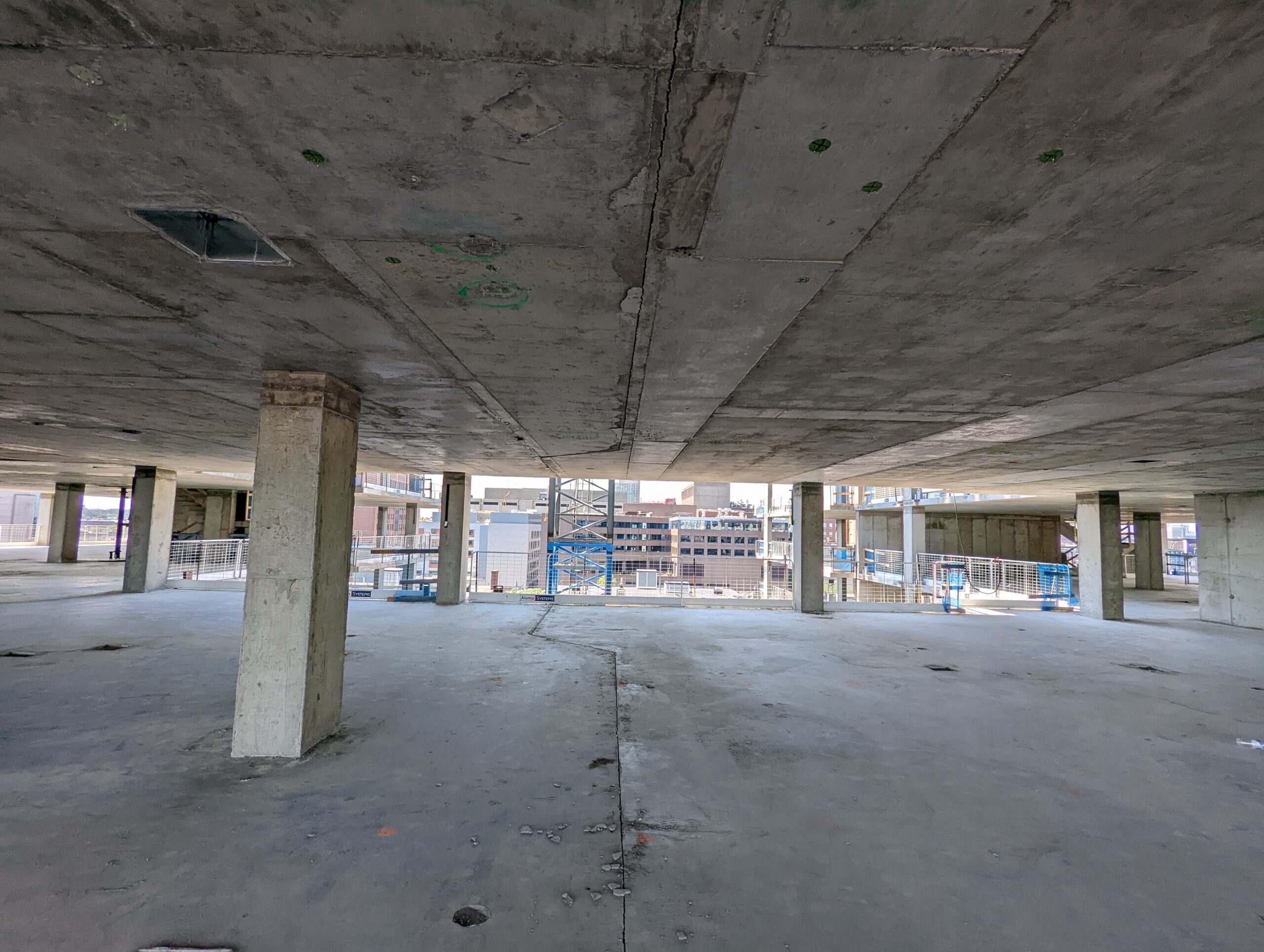
Often, yes, even without tendons. A conventionally reinforced slab still shrinks as it cures, and when a large slab is tied together rigidly that drying shrinkage is restrained. Restraint-to-shortening then builds up and cracks the slab. The pour strip relieves that by leaving a gap open so each side shortens on its own before the reinforcement is tied continuous across the seam. That leave-out is the one detail reinforced concrete construction still forces open at the construction joint, and the one a mechanical splice is built to close.
"A reinforced slab has to release drying shrinkage. A post-tensioned slab has to release drying shrinkage plus elastic shortening plus creep. Same leave-out on the drawings, different amount of movement behind it."
So the difference is one of degree, not kind. A reinforced slab moves less because drying shrinkage is its only source of shortening, so it needs less total relief than a PT slab that adds elastic shortening at stressing and creep on top. The pour strip, delay strip, or closure strip serves the identical job on both: sequence the placements so each side shrinks before the connection is locked. It is one member of the family of movement joints in reinforced slabs, and the one tied specifically to sequencing placements rather than to sawn or formed lines.
The trade the industry has accepted for decades is the same on both slab types: the reinforcement is interrupted, water can enter the open gap, and a return crew has to be scheduled weeks later. The alternative is not to detail the strip more carefully. It is to keep the reinforcement continuous so the leave-out never has to sit open. Send us your slab details and our engineers will tell you where a strip can come off your critical path.
How PS=Ø eliminates the pour strip on both slab types
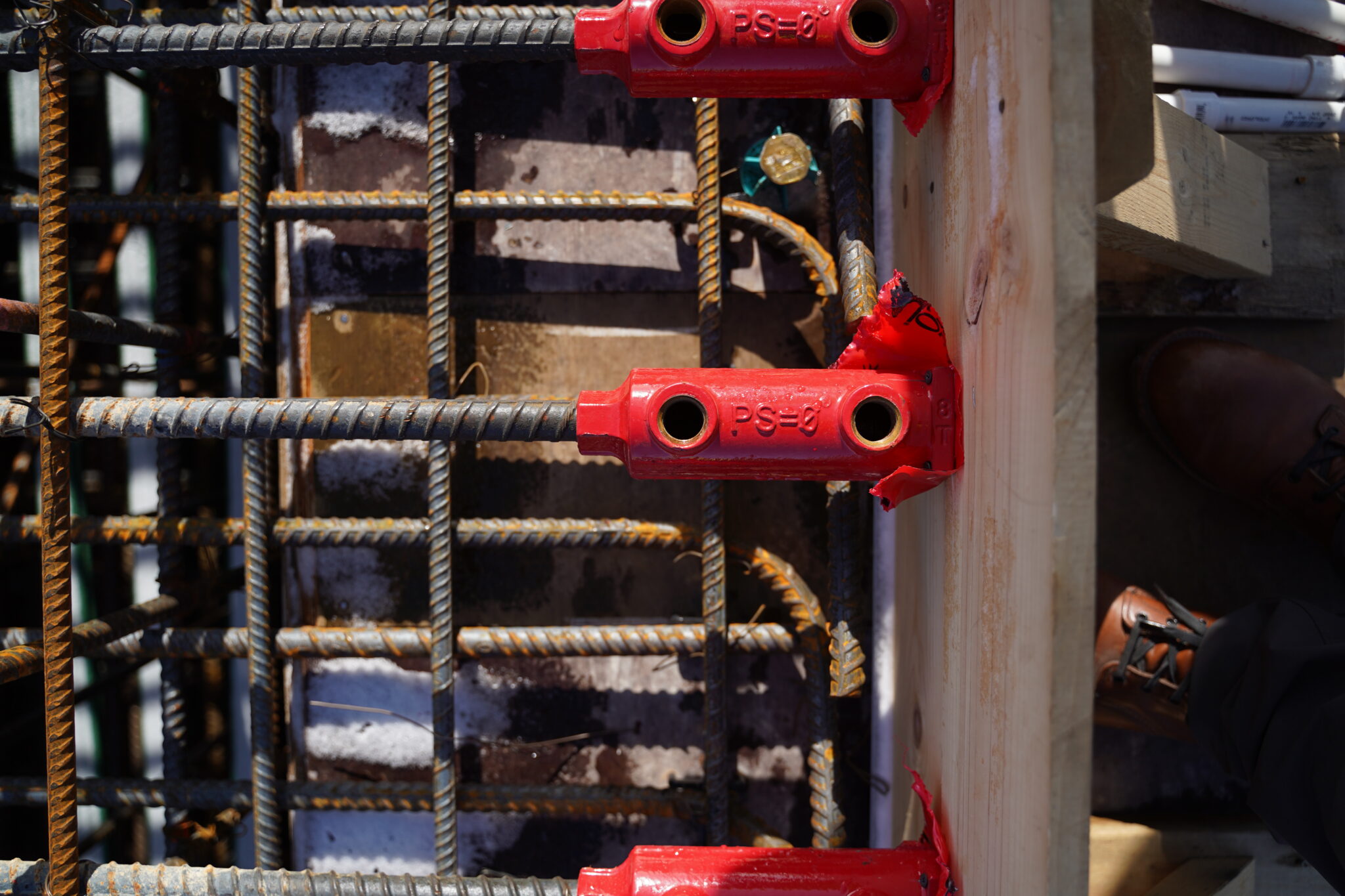
The pour strip exists to let the slab shorten, not to interrupt the reinforcement, so the movement can be kept while the open leave-out is removed. That logic holds whether the shortening comes from drying shrinkage alone or from elastic shortening and creep on a PT slab. PS=Ø replaces the open strip with a self-supporting mechanical splice on both. Here is the sequence at a high level.
- 1
Engineered shop drawings
Our engineers detail the splice into your structural design so it carries the reinforcement across the seam where a pour strip would otherwise interrupt it. On a PT slab that means splicing the mild steel and working with the stressing sequence, not against it.
- 2
Couplers set where the leave-out would sit
The couplers and closure strip go in exactly where the pour strip would sit, so crews are not leaving an open gap and exposed rebar across the deck for the trades to work around.
- 3
The slab shortens and cures naturally
A reinforced slab releases its drying shrinkage. A PT slab is still stressed on the engineer of record schedule and releases elastic shortening, creep, and drying shrinkage. Either way the movement happens off the critical path, with no 30 to 60 day open strip holding the schedule.
- 4
Grout the couplers to close the seam
Once shortening is complete, the couplers are grouted to finish a continuous, ICC Approved, ACI 318 Type 1 and Type 2 compliant connection. The pour strip is gone on both slab types.
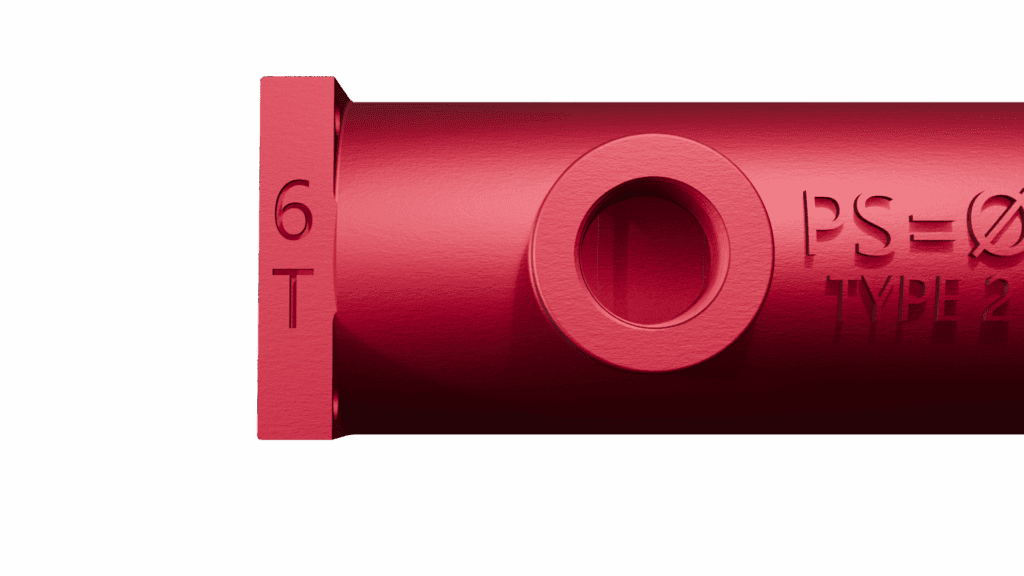
The couplers and closure strip that make this work are the same continuous mechanical splice on both slab types. Our system page walks through the continuous mechanical splice used in both slab types and how the whole assembly installs. When you are ready to design a strip out of a specific structure, call (800) 355-8414.