

Reinforced Concrete Construction, Without Breaking the Reinforcement
Reinforced concrete construction turns on the construction joint. Keep the reinforcement continuous across that seam, and the pour strip, wall leave-out, and expansion joint stop dictating your schedule.
Most guides explain the rebar. We attack the seam where that rebar gets interrupted.
Reinforced concrete construction embeds steel reinforcing bars so the steel carries the tension the concrete cannot, and every explainer walks through that and stops. Ours starts from the detail those guides skip: the construction joint, where a placement stops and the reinforcement has to be carried across to the next pour. Traditionally that seam is a pour strip or delay strip, a gap left open for weeks so the adjacent concrete can shrink before the two sides are tied together, and it sits on the critical path with exposed rebar the whole time. That open leave-out is the thing PS=Ø was built to remove. Our couplers and closure strip go in where the pour strip would sit, so the slab still shortens naturally but the reinforcement stays continuous across the seam and the crew is never leaving an open joint. PS=Ø is an ICC Approved, ACI 318 Type 1 and Type 2 compliant mechanical rebar splice engineered over 45 years for reinforced and post-tensioned structures.
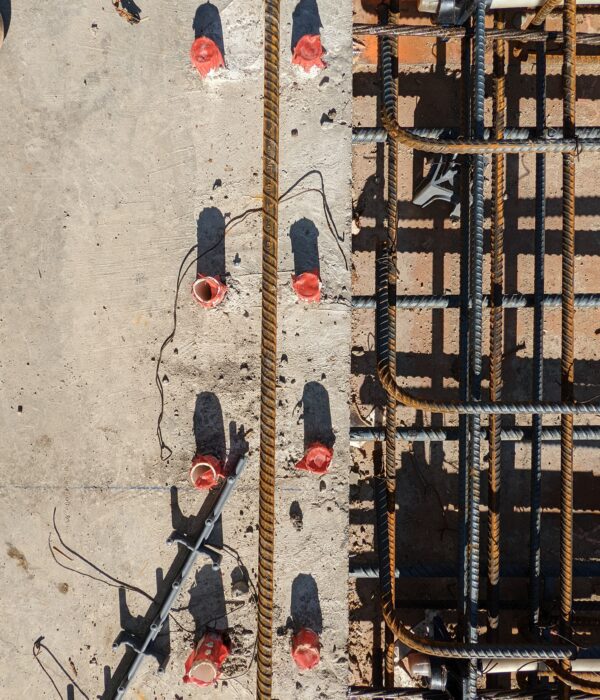
What is reinforced concrete construction?
Reinforced concrete construction places steel reinforcing bars inside the concrete so the steel carries tension while the concrete carries compression. Concrete is strong in compression and weak in tension, so the rebar is positioned where the member would otherwise crack and pull apart under load. That much is standard. What decides the schedule is not the rebar itself, it is the seams: every place a placement stops at a construction joint, the reinforcement has to be carried across to the next placement, and how you carry it decides how long the joint sits open.
That shrinkage relief is exactly what PS=Ø preserves. Instead of leaving the strip open and coming back to fill it, the reinforcement is spliced mechanically across the seam. The slab still shrinks and cures on its own timeline, then the couplers are grouted to complete a continuous connection. You can see the full assembly on our system page, where the couplers and closure strip replace the traditional pour strip.
Continuous concrete reinforcement methods
The reinforcement in a slab is only as continuous as its weakest seam. At a construction joint you have a handful of ways to carry the steel across, and they differ mostly in one thing: whether the joint has to sit open before the reinforcement acts together. Here is how the common methods compare on continuity.
| Method | How it carries the steel across | Continuity at the seam |
|---|---|---|
| Lapped splice | Two bars overlap by a code-prescribed length so load transfers through the surrounding concrete. | Continuous only after the concrete around the lap is cast. At a construction joint that means waiting on a return pour before the bars act together. |
| Doweled joint | Dowels cross the construction joint, often through a keyway, to tie the next placement to the last. | Ties the two placements, but the reinforcement is still interrupted at the seam until the second side is poured. |
| Pour strip / delay strip | A strip of slab is intentionally left out so the adjacent concrete can shrink first, then cast later. | Deliberately discontinuous. The gap sits open for weeks with exposed rebar before the reinforcement is tied across it. |
| Mechanical splice (PS=Ø) | Couplers join the bars end to end at the seam, and a closure strip lets the slab shorten before the couplers are grouted. | Reinforcement stays continuous across the seam. The slab still shortens, but no open leave-out sits on the critical path. |
The pattern is clear: lapped, doweled, and pour-strip connections all interrupt the reinforcement at the joint and depend on a later placement to make it whole. A mechanical splice is the one method that keeps the steel continuous across the seam while the slab still shrinks. For the broader family the seam belongs to, see concrete movement joints, or call (800) 355-8414 to talk through a specific detail.
Reinforced vs post-tensioned concrete, in brief
Both are reinforced concrete, but they move differently. A conventionally reinforced slab uses passive rebar that resists tension after the concrete cracks, and it shortens mainly from drying shrinkage. A post-tensioned slab uses high-strength tendons stressed after curing to compress the concrete, so it shortens elastically at stressing plus creep on top of drying shrinkage, which is why post-tensioned structures rely on pour strips even harder. The seam problem is the same either way: the reinforcement that has to stay continuous across the construction joint is where PS=Ø does its work.
We keep the full comparison on two dedicated pages rather than repeating it here. Read post-tensioned vs reinforced concrete for when each slab type is used and why they shorten differently, and the post-tensioned concrete slab page for how the pour strip comes off the critical path on post-tensioned work.
A mechanical rebar splicing system for concrete
PS=Ø is a mechanical rebar splicing system that keeps reinforcement continuous across a construction joint while still letting the slab shrink. Instead of a lapped or doweled connection that waits on a return pour, couplers join the bars end to end at the seam, and a closure strip lets the concrete shorten before the couplers are grouted. Here is the sequence at a high level.
- 1
Engineered shop drawings
Our engineers detail the splice into your structural design so it carries the reinforcement across the construction joint where a pour strip or delay strip would otherwise interrupt it.
- 2
Couplers set where the leave-out would sit
The couplers and closure strip go in exactly where the pour strip would sit, so crews are not leaving an open gap and exposed rebar across the deck for the trades to work around.
- 3
The slab shrinks and cures naturally
The concrete goes through its drying shrinkage off the critical path. No open strip left waiting to be poured back, and no restraint-to-shortening cracking, because each side still shortens on its own.
- 4
Grout the couplers to close the seam
Once shrinkage is complete, the couplers are grouted to finish a continuous, ICC Approved, ACI 318 Type 1 and Type 2 compliant connection. The reinforcement is continuous and the leave-out is gone.
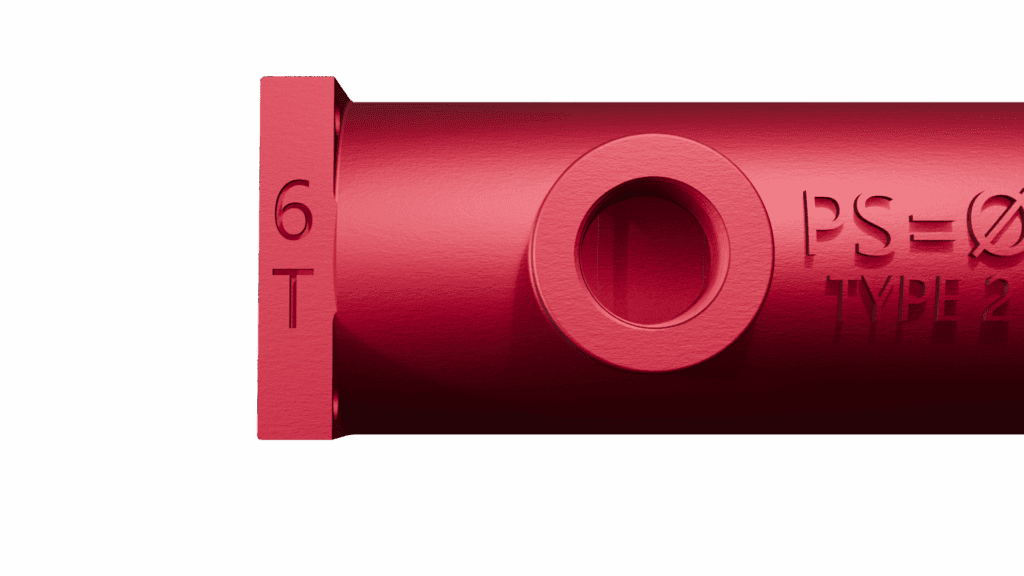
The method has been used to keep reinforcement continuous across the construction joint on live commercial jobsites including Gaylord Pacific, The Ottawa Hospital, and IU Health Downtown. See more on the case studies page, then call (800) 355-8414 to talk through your structure.
What continuous reinforcement changes on the jobsite
Keeping the reinforcement continuous does more than satisfy the structural intent. It removes the open leave-out that every other trade has to work around. Engineers hold continuity without detailing an extra open strip. Placement and finishing crews pour continuously and skip the return trip to close the gap. Following trades cross a self-supporting seam instead of routing around an open joint that collects debris and water. For a crew-level view of how that plays out, read what eliminating the leave-out means for placement and finishing crews.
Want the full mechanics of the seam, the couplers, the closure strip, and the grouting that replace the pour strip on reinforced and post-tensioned work? Our system page walks through the couplers and closure strip that keep the reinforcement continuous and how the whole assembly installs.